Moscow's Imperial Estates: Tsaritsyno, Kuskovo, Ostankino, Arkhangelskoye and the Petrovsky Palace
Published 21 November 2026 · 7 min read
Most visitors to Moscow see the Kremlin, Red Square and the great museums of the centre. Fewer discover the estates that surround the city: country residences built by empresses and aristocratic families in the 18th and 19th centuries, with palaces, ponds, pavilions and parks. Today most of them lie within the city limits, yet they remain surprisingly calm, and offer one of the most elegant ways to understand imperial Russia.
Tsaritsyno: Catherine the Great's unfinished dream In 1775 Catherine the Great bought an estate in the south of Moscow and commissioned Vasily Bazhenov, and later Matvei Kazakov, to build a residence there. The result is unique in Russia: a fantasy of red brick and white stone inspired by Gothic and Old Russian architecture. The Grand Palace remained unfinished for more than two centuries before it was completed and restored at the beginning of the 21st century. Today its halls, bridges, greenhouses and landscaped park, set around a chain of ponds, make it one of the city's most romantic places, especially at sunset.
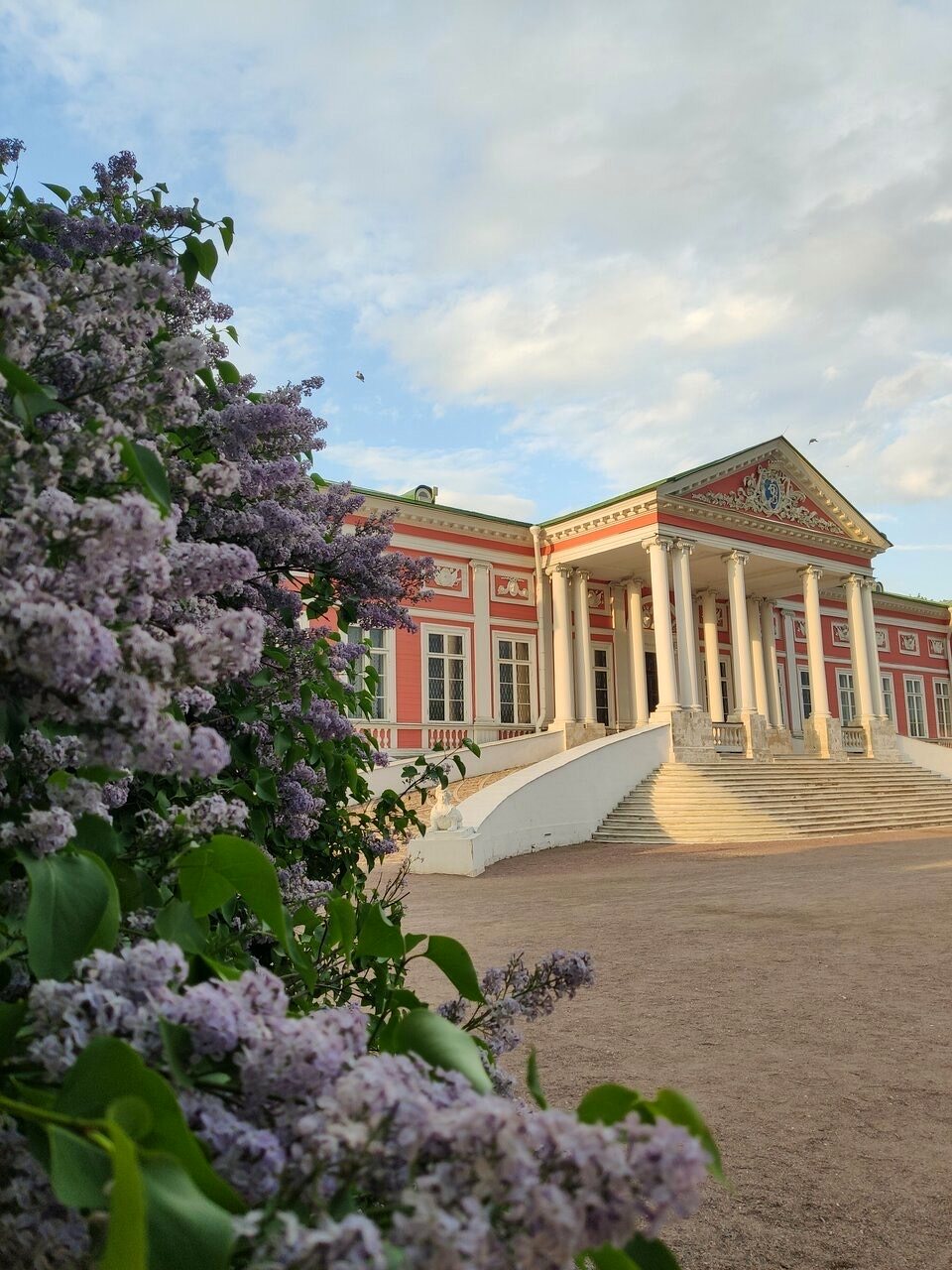
Kuskovo: the summer residence of the Sheremetevs Kuskovo in lilac season
RUSSIA10
Kuskovo was the summer estate of the Sheremetev family, one of the wealthiest in the Russian Empire. Its palace, painted in soft pink and white, overlooks a large pond, while a French formal garden is lined with pavilions: the Grotto, the Dutch House, the Italian House and the Hermitage. The estate also houses a museum of ceramics with a remarkable collection of Russian and European porcelain. In late May, when the lilacs bloom, Kuskovo is at its most enchanting.
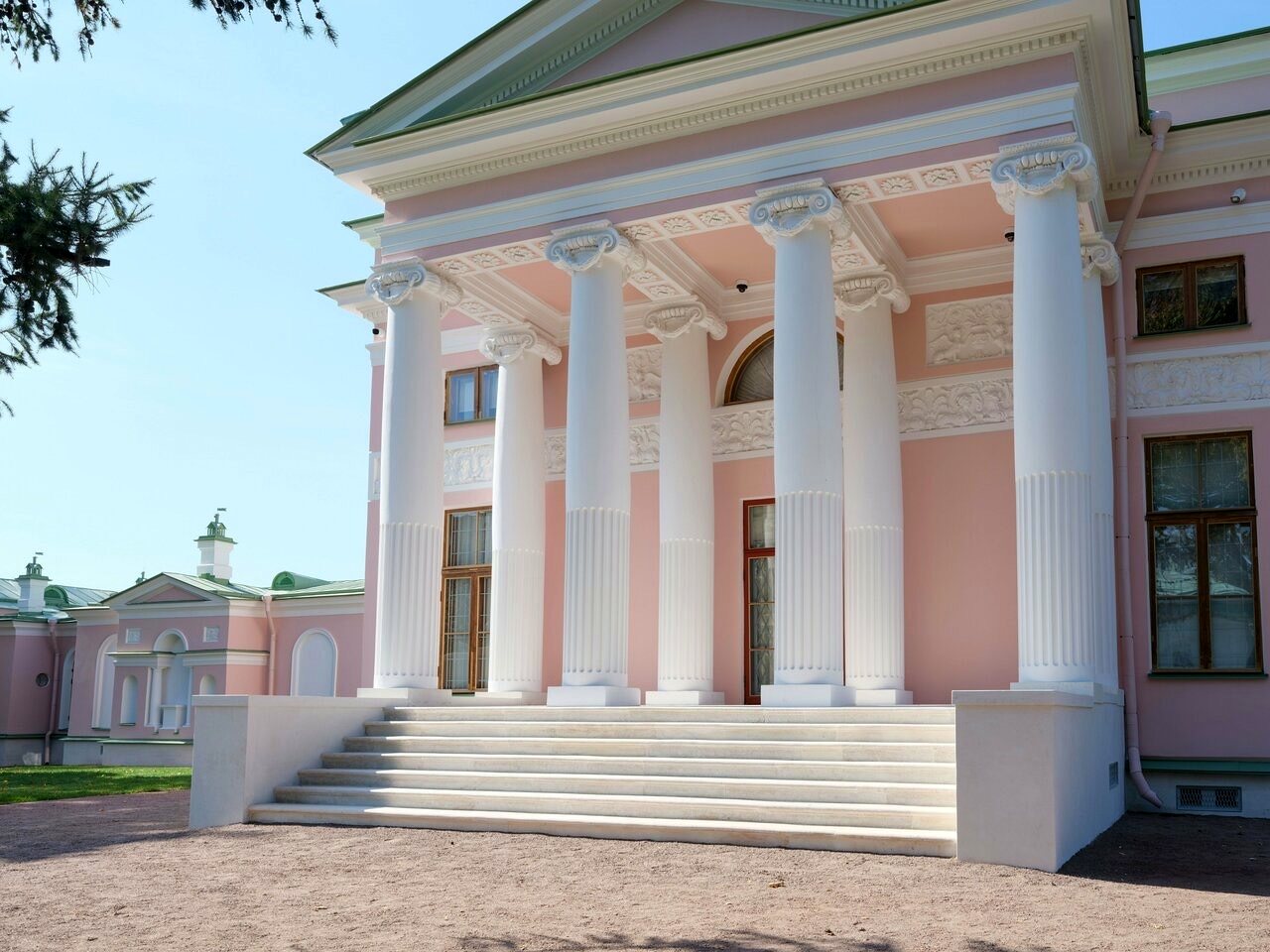
Ostankino: a palace built for theatre Ostankino Palace
RUSSIA15
At the end of the 18th century, Count Nikolai Sheremetev built Ostankino as a palace for the arts. Behind its pink façade and white columns, much of the building is made of wood, finished to look like marble and stone. At its heart is a theatre where the count's own troupe of serf actors performed, among them the celebrated singer Praskovia Zhemchugova, who later became his wife. Ostankino is one of the most refined examples of Russian classicism, and a moving story of art and love.
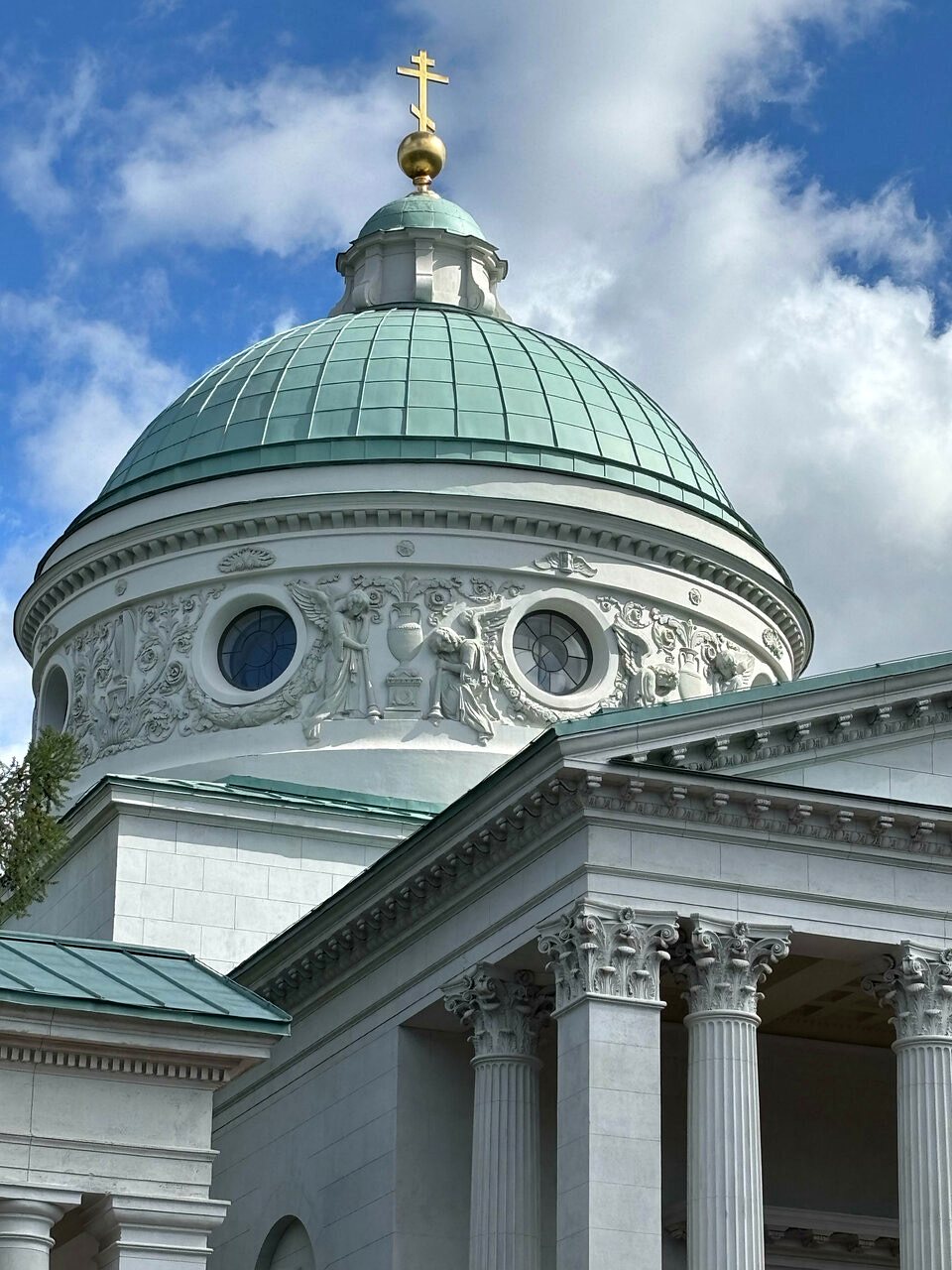
Arkhangelskoye: the Versailles of Moscow Arkhangelskoye
RUSSIA20
West of the city, Arkhangelskoye was the estate of Prince Nikolai Yusupov, a diplomat and one of the greatest art collectors of his time. Its classical palace stands above terraced gardens decorated with marble statues, descending towards the Moskva River, which is why the estate is often called the Versailles of Moscow. In the park, the memorial church of the Yusupov family, known as the Colonnade and built in the early 20th century, is crowned with a green dome and delicate reliefs of angels.
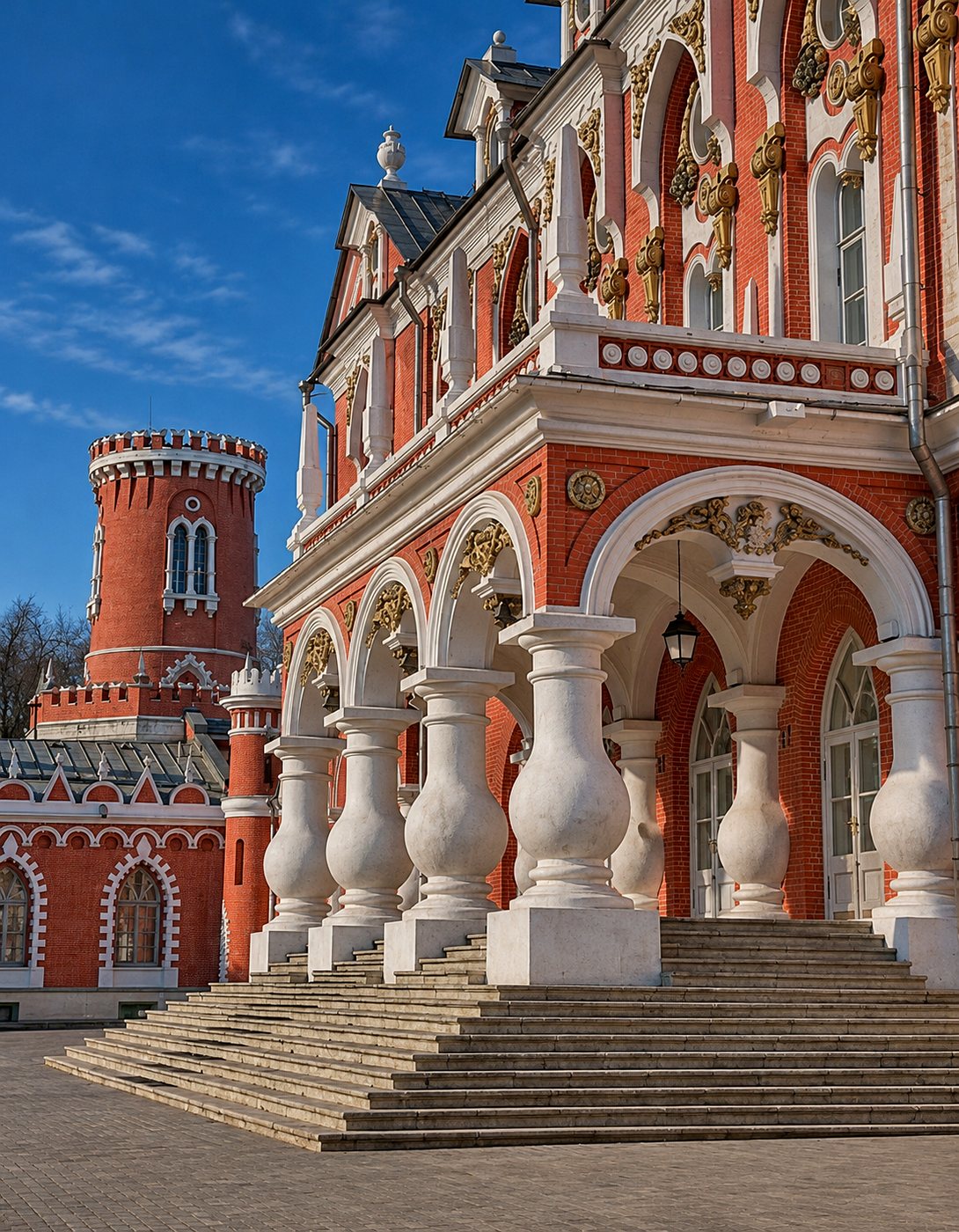
The Petrovsky Travel Palace Petrovsky Travel Palace
RUSSIA25
Built by Matvei Kazakov between 1776 and 1780, the Petrovsky Palace was a stop on the road from St-Petersburg, where the imperial family rested before their ceremonial entry into Moscow for the coronations. Its red brick walls, white stone details and towers create a fairy-tale silhouette. In 1812, Napoleon took refuge here during the great fire of Moscow.
And Kolomenskoye Above the Moskva River, the former royal estate of Kolomenskoye is home to the Church of the Ascension, built in 1532 and listed by UNESCO, as well as a reconstruction of the wooden palace of Tsar Alexei Mikhailovich. It completes this journey through five centuries of Russian history.
Our advice The estates are spread across Moscow, so we recommend visiting no more than two per day, with a private chauffeur: Tsaritsyno with Kolomenskoye in the south, Ostankino with the Petrovsky Palace in the north, Kuskovo in the east, and Arkhangelskoye in the west, perhaps with lunch nearby. Late spring and early autumn offer the most beautiful light in the parks. Discover our Moscow & Surrounding Areas collection, or contact us to plan your visit.